Home oxygen: who it helps and why the prescription comes first
September 30, 2026 · 4 min read
Updated: 2026-09-30

An oxygen concentrator is equipment for a defined oxygen-delivery need. It should not be chosen as a general wellness upgrade for a healthy person. Start with clinical assessment and a written treatment plan, then find the device that can meet that plan. Portability, appearance and a large output label cannot decide whether supplemental oxygen is appropriate.
Published by Five Elements · wellness equipment supplier
Who can benefit from home oxygen?
NHS guidance describes home oxygen for people who need supplemental oxygen following assessment and prescription. The ATS guideline makes different recommendations according to disease and severity of low blood oxygen. Benefits established for severe chronic hypoxaemia cannot simply be extended to ordinary tiredness, every case of breathlessness or people with normal oxygenation.
Why more oxygen is not automatically better
The required mode, setting and schedule belong to the clinical plan. Do not increase them to chase an attractive reading or copy another user. A home measurement can provide information, but it does not explain the cause of symptoms by itself. If a person becomes acutely unwell, seek urgent medical help rather than treating an equipment purchase as the emergency response.
What should the prescription clarify?
Ask the care team to explain the delivery required at rest, during activity and during sleep where relevant. Understand which changes need review and who to contact with problems. Keep that information available for the equipment discussion. A supplier can compare specifications, but should not invent treatment settings or decide that a portable model is suitable without the necessary clinical requirements.
Pulse dose and continuous flow are different
A continuous-flow specification gives a delivery rate. Pulse devices respond to inhalation, and their numbered settings are not a universal conversion to continuous litres per minute. Request the actual performance table for the offered version and conditions. Confirm with the care team that the delivery works for each intended situation rather than relying on a headline equivalent-flow claim.
What makes the home setup workable?
Plan a location with the clearances required by the manual and a route for tubing that does not obstruct walking. Discuss power failure and backup with the provider before installation. Check who explains alarms, cleans permitted parts and arranges service. A compact housing does not remove these tasks. The person using the equipment should be able to reach essential controls.
Why fire precautions are part of the purchase
Oxygen makes combustion more intense. Follow the provider’s instructions about ventilation, separation from heat and ignition sources, and prohibited products. Smoking, flames and inappropriate oils or aerosols do not belong near oxygen equipment. Make household members aware of the plan. Do not substitute a general room photograph for a proper installation and safety assessment.
What should you compare between quotations?
Match the prescribed delivery first, then compare the complete kit: power options, the chosen battery where relevant, tubing, permitted accessories, alarms and service arrangements. Request the exact version and a manual, not just a family name. Confirm performance with the proposed accessories. An appealing small unit is not equivalent to a stationary system merely because both are called concentrators.
What is the next step in Indonesia?
Arrange clinical assessment before selecting equipment for personal use. Once requirements are clear, send the city, intended environment and delivery specification for a technical comparison. Keep prescriptions and personal health details within the appropriate care and privacy arrangements. A useful supplier response explains compatibility and support; it does not promise extra energy, athletic recovery or longer life for healthy users.
Choose equipment
Research and sources
About this guide and its sources
Five Elements publishes these guides to help compare equipment and plan its use. Research findings apply to the devices, participants and conditions studied. Model specifications and operating instructions must be checked for the version offered. Any individual treatment decision belongs with an appropriately qualified professional.
Dates above identify publication and substantive updates. Linked sources let you inspect the evidence; catalogue cards show current equipment prices. To report an error or request a model document, contact Five Elements with the page address and equipment name.
Benefits, evidence and practical guides

Travelling with an oxygen concentrator: planning for Indonesia
For someone already prescribed oxygen, a portable unit can support mobility only when it meets their clinical needs and travel requirements. Plan the whole journey before choosing a model.
Read the guide →
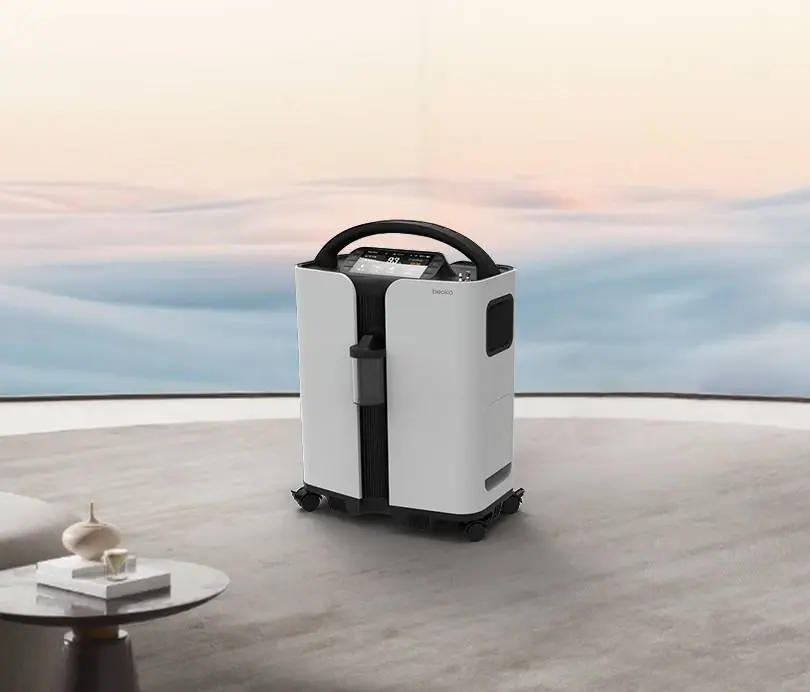
Portable or Stationary Oxygen Concentrator: What to Compare
Begin with the required oxygen delivery. Then compare the portable or stationary format, power supply and exact model documentation.
Read the guide →
Planning equipment for your space?
Tell us your city and the equipment you are considering. We will help compare configurations and prepare a quotation.
Chat on WhatsApp